
Wrestling

General Introduction to Naadam Wrestling
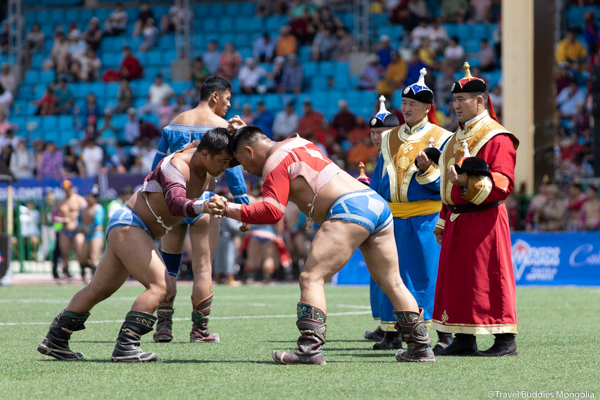
The National Naadam Festival of Mongolia is held every year from July 11 to 13. One of the main and most important events of the festival is Traditional Mongolian Wrestling. This sport is a core part of Mongolian culture and history, with traditions that go back hundreds of years.
Key Features of Mongolian Wrestling
Type of wrestling:
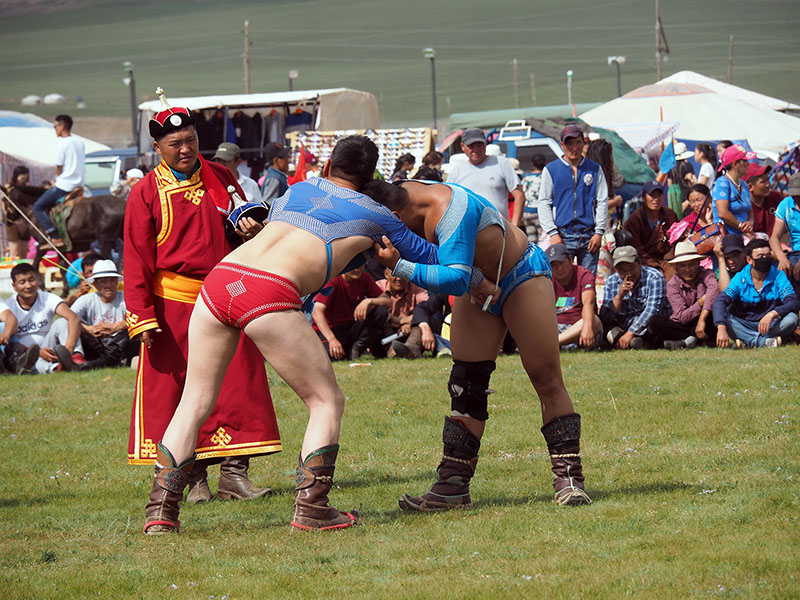
Mongolian wrestling has no weight classes. It is a sport that tests strength, skill, balance, speed, and strategy.
Rules:
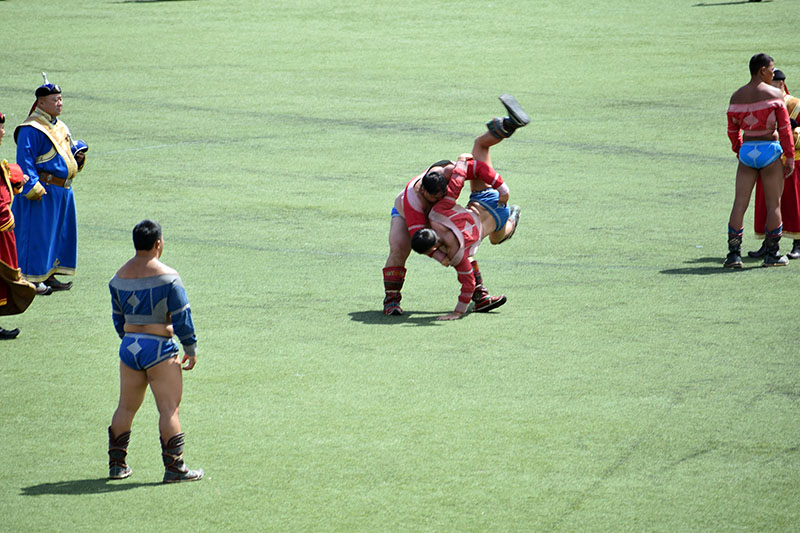
Two wrestlers compete against each other. The match continues until one wrestler touches the ground with any part of the body other than the feet, such as the knee, elbow, hand, or shoulder. The wrestler who touches the ground loses.
Strengths of the sport:
Mongolian wrestling is not only about physical power. It also requires technique, endurance, mental strength, and tactical thinking.
Traditional clothing:
Wrestlers wear traditional outfits called zodog (open-front jacket) and shuudag (shorts), designed to allow free and powerful movement.
Organization of Naadam Wrestling
Competition rounds:
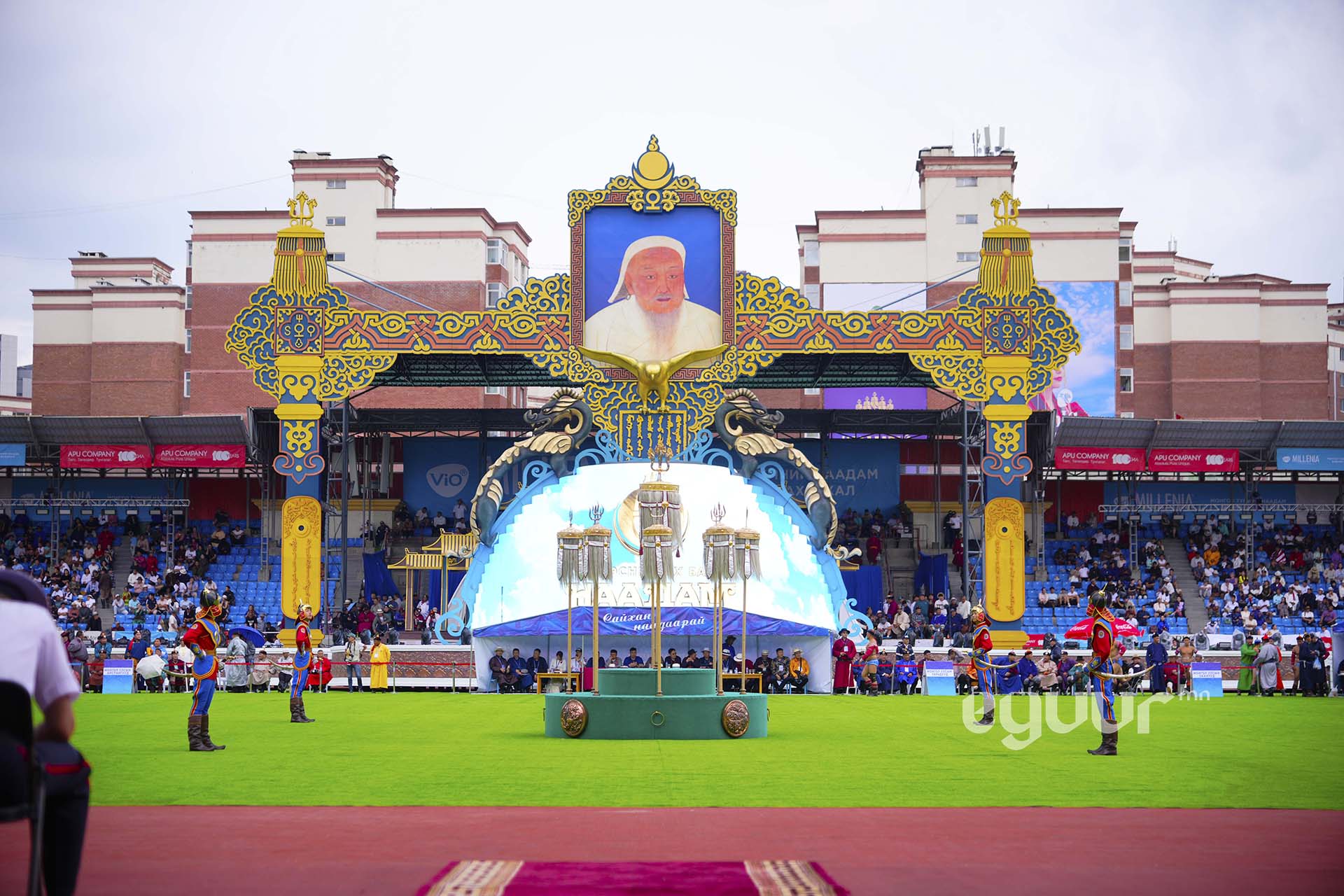
Naadam wrestling usually begins with 512 or 1,024 wrestlers. Winners advance through each round until the final champions are decided.
Titles and ranks:
Successful wrestlers are awarded honorary titles such as Nachin, Zaан, Khartsaga, Arslan, and Avarga (Champion). These titles increase based on performance and achievements.
Prizes:
Winners receive valuable prizes such as cash awards, vehicles, and apartments, reflecting the high prestige of the sport.
Famous Mongolian Wrestlers
Mongolia has produced many legendary wrestlers, including:
B. Bat-Erdene – 11-time Naadam champion
Kh. Bayanmunh – 10-time Naadam champion
A. Sukhbat – Known for excellent technique and fast wrestling
Ch. Sanjaadamba – One of the most successful modern champions
Cultural Importance
Mongolian wrestling is more than just a sport. It represents strength, honor, tradition, and national identity, and plays a vital role in preserving Mongolia’s nomadic heritage.